
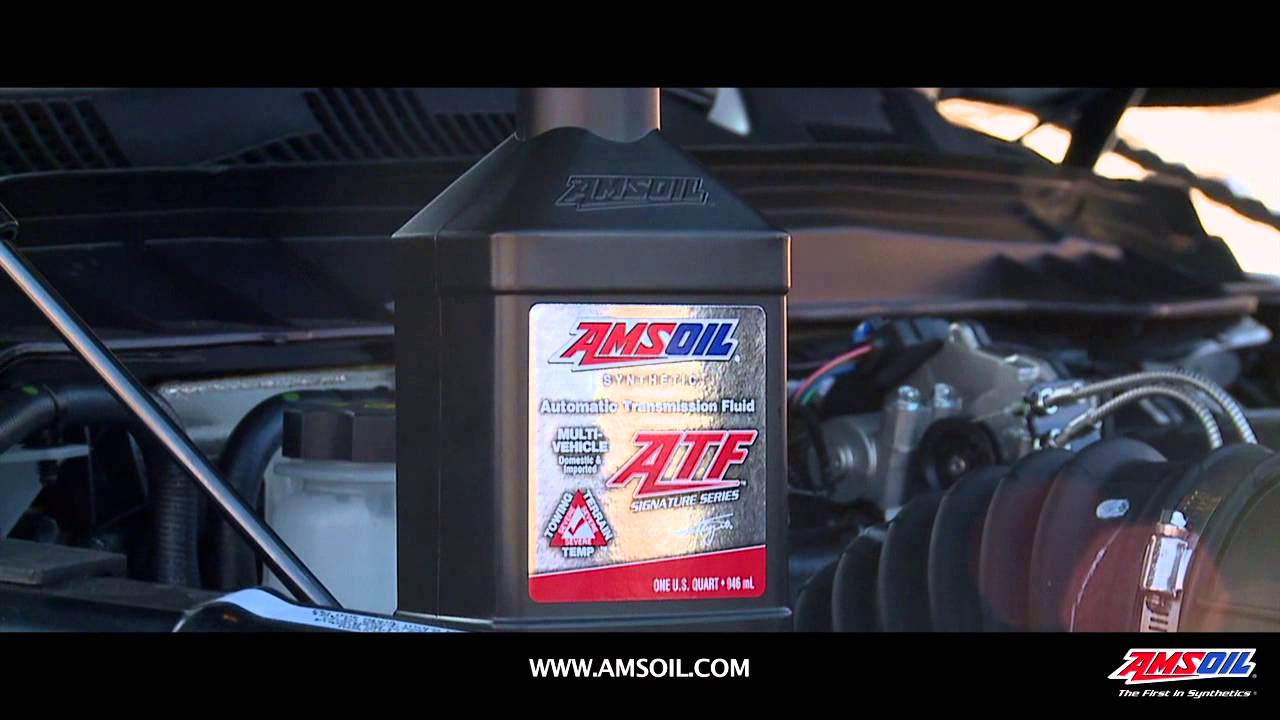
AMSOIL Synthetic Automatic Transmission Fluid
A fuel efficient automatic transmission fluid recommended for GM, Ford and Toyota transmissions where lighter viscosity oil is required. Provides the same excellent protection and performance as AMSOIL Signature Series Multi-Vehicle ATF. Recommended for vehicles requiring GM DEXRON® VI, Ford MERCON® LV and SP, Honda DW-1, Nissan Matic-S and Toyota WS fluid specifications.
Ordering, resources and product specifications
 Synthetic Low Viscosity Automatic Transmission Fluid (ATL)
Fuel Efficient Synthetic Automatic Transmission Fluid
Transmission Fluid Evacuation Service:
Bulletin From Filter Manufacturers Council (16k PDF)
Transmissions in commercial vehicles, SUVs, trucks and vans – particularly those used for hauling or towing – are subjected to severe-service operation and increased heat. Elevated temperatures cause fluids to break down, allowing damaging metal-to-metal contact and the formation of sludge and deposits. The problem is worse in modern transmissions with more gears, clutch packs and narrow oil passages that require clean, high-quality fluid to achieve maximum performance and life.
Check Price or BuyCall 800-579-0580 for competitive current price.
Or use the online preferred customer portal if you choose to order online.
Order AMSOIL Low-Viscosity ATF in our new online store
Vehicle Look-up: Match AMSOIL Products to your model
AMSOIL Signature Series Synthetic Automatic Transmission Fluid is specifically formulated to withstand the rigors of heavy towing, elevated temperatures and challenging terrain. It remains fluid in sub-zero temperatures and provides reserve protection during heavy use and even abuse.
Package sizes include:
Quarts also available in new AMSOIL Easy-Packs
1-Quart Bottle
1-Quart Bottles (case of 12)
1-Gallon Bottle
1-Gallon Bottles (case of 4)
2.5-Gallon Bottle
2.5-Gallon Bottles (case of 2)
30-Gallon Drum
55-Gallon Drum
AMSOIL Tech Tip: Transmission Fluid
Proven in 180,000-mile, Severe-Service Taxi Fleet Field Trial
To demonstrate its effectiveness in severe service, Signature Series Multi-Vehicle Synthetic ATF was installed in Las Vegas taxi cabs. The vehicles routinely encountered demanding stop-and-go driving loaded with passengers and cargo, while the desert environment presented extremely hot ambient temperatures, placing enormous strain on the fluid. Following 180,000 miles, a transmission was selected for analysis. The Aluminum Beaker Oxidation Test (ABOT) is an industry standardized test used to determine a transmission fluid’s oxidation resistance, which is a good indicator of its service life. Testing by an independent, third-party lab revealed that after 180,000 miles in severe service, Signature Series Multi-Vehicle Synthetic ATF resisted oxidation longer than required for new fluid to meet the Chrysler ATF+4 specification (see graph). Internal components, including the valve body and clutch plates (pictured), were virtually free of damaging sludge, deposits and wear, confirming the lubricant’s high level of protection for severe-service applications.


Protects Against Thermal Breakdown
Signature Series Synthetic ATF is formulated with high concentrations of antioxidants, making it naturally heat resistant. It provides outstanding protection against sludge and varnish deposits that clog narrow oil passages and contribute to clutch glazing. After 180,000 miles in severe service, fluid analysis revealed Signature Series Multi-Vehicle Synthetic ATF contained 83 percent of its original oxidation inhibitors, proving its long-lasting resistance to thermal breakdown.
Outstanding Wear Protection
Varying speeds and loads causes torque multiplication and extreme stress on gears and bearings. AMSOIL formulated Signature Series Synthetic ATF with high film strength and premium anti-wear/extreme-pressure additives to help prevent wear during severe service. In the industry-standard FZG Gear Wear Test, Signature Series Multi-Vehicle Synthetic ATF that had been used for 180,000 severe-service miles achieved a “Pass” at stage 12 – the highest stage. The results exceeded the Ford MERCON V and Chrysler ATF+4 specifications for new fluid, demonstrating the lubricant’s long-lasting wear protection.
Cold-Temperature Fluidity
Cold, thick automatic transmission fluid lengthens shift times and reduces fuel economy. Signature Series Synthetic ATF is wax-free and delivers extraordinary cold-flow properties. It helps improve shift response, energy efficiency and warm-up times.
Friction Durability
Today’s transmissions are smaller and must withstand higher horsepower and torque while delivering smoother shifts, all with longer fluid life recommendations. AMSOIL Signature Series Synthetic ATF is formulated with friction modifier additives that deliver outstanding clutch-holding capacity (static friction), torque-transfer ability (dynamic friction) and anti-shudder properties (slipping torque-converter clutches). Analysis reveals that after 180,000 miles in severe service, Signature Series Multi-Vehicle Synthetic ATF provides nearly identical friction properties as new fluid for smooth, reliable shifts.
APPLICATIONS
AMSOIL Signature Series Fuel-Efficient Synthetic ATF is recommended for transmissions and other applications that require any of the following specifications:
Aisin-Warner AW-1; BMW 83 22 0 142 516, 83 22 2 152 426, 83 22 2 289 720 (ATF3+); Chrysler MOPAR* 68157995A, SP-IV; DSIH 6p805; Ford MERCON* LV, SP; GM DEXRON* HP, DEXRON* VI; Honda/Acura DW-1*, Type 3.0; Hyundai/Kia SP-IV, SPH-IV, SP-IV-RR, NWS-9638, SP4-M; JASO 1A-LV; JWS 3324; Mercedes Benz 236.12,236.14,236.15, 236.41; Mitsubishi SP-IV, ATF J3, ATF-PA; Nissan Matic-S, Matic-W; Saab 93 165 147; Shell M-1375.4, M-1375.5, M-1375.6, M-L 12108; Toyota WS; Volvo 31256774; VW/Audi G 055 005, G 055 162, G 060 162; ZF S671 090 255.
AMSOIL Signature Series Fuel-Efficient Synthetic ATF is backward compatible and replaces DEXRON III fluids in older GM automatic transmissions. (DEXRON VI specification supersedes the obsolete DEXRON III in GM vehicles.) But we recommend the “red” label ATF if you have a older worn transmission with over 160,000 miles if it was one which called for the original specification of DEXRON III.
Call 800-579-0580 if you have any questions.
SERVICE LIFE
Normal Service: Follow the vehicle manufacturer’s normal-service drain interval.
Severe Service: Double the vehicle manufacturer’s severe-service drain interval.
Change at the vehicle manufacturer’s recommended drain interval outside U.S. and Canada.
HEALTH & SAFETY
This product is not expected to cause health concerns when used for the intended application and according to the recommendations in the Material Safety Data Sheet (MSDS). An MSDS is available via the Internet at www.amsoil.com or upon request at (715) 392-7101. Keep Out of Reach of Children. Don’t pollute.
AMSOIL PRODUCT WARRANTY
AMSOIL products are backed by a Limited Liability Warranty. For complete information visit www.amsoil.com/warranty.aspx.
Also see:
ATL-ATF Product Data Sheet
How to change your own Automatic Transmission Fluid (flush)
How much ATF do I need? Use our look up table!!
Transmission Fluid Evacuation Service:
Myth-buster: Bulletin From Filters Manufacturers Council (PDF File 16k)
Fully Fortified
• Anti-wear/extreme-pressure agents—Extend gear life
• Durable friction modifiers—Anti-shudder
• Anti-oxidants—Extend fluid life
• Seal conditioners—Reduce leaks
• Detergents and dispersants—Keep clean and control deposits
• Corrosion inhibitors—Control rust
• Anti-foam agents—Improve hydraulic function
| Recommendation for cars and light duty trucks | ||
|---|---|---|
| Specification | Normal Service | Severe Service |
| DEXRON® VI | 100,000 miles (160,000 km) | 50,000 miles (80,000 km) |
| MERCON® LV, SP | Follow vehicle manufacturer’s recommendations | |
| Toyota WS | 100,000 miles (160,000 km) | 60,000 miles (96,000 km) |